Dhikr for the 34th Sunday of the Year (Christ the King) Year C
Readings: 2 Samuel 5: 1-3; Colossians 1: 12-20; Luke 23: 35-43
Selected Gospel Passage: “Jesus, remember me when you come in your kingly power." And Jesus said to him: "truly I say to you, today you will be with me in Paradise." (Luke 23: 42-43
Meditation: Our King is Jesus hung on the Cross for his great love for us... this reminds me of the story told by Elie Weisel at the Nazi Concentration Camp. The night before a prison guard was killed. The camp rule said that for a guard killed, 10 prisoners were taken to be hung before all the prisoners of the camp. So that morning, the Nazi gathered ten young boys... and they hung them before all the prisoners. A loud cry came at the back: "'Where is Yahweh, our God!" And answer came back: 'There is Yahweh, our God, HANGING IN THE GALLOWS...'. When we celebrate the Feast of Christ the King, NEVER forget that the Christ the King is NAILED and HANGING on the Cross.
Visit: www.badaliyya.blogspot.com
Badaliyya
The “other” person that journeyed (mystically) with Fr. Charles de Foucauld in that “enterprise” (Badaliyya) in the world of Islam is Fr. Louis Massignon. One of the great contributions of Fr. Massignon in Muslim-Christian Relations is his monumental studies on Islamic Mysticism, specifically on the Life and Martyrdom of the Great Sufi Al-Mansour Al Hallaj.
Louis Massignon’s Meditation on Badal (Ransom)
In Charity. It is an active and sensitive charity. Solidarity understood as the ability to suffer with those who suffer injustice. It is an attempt to liberate … at least to know how to protest with sorrow. It is to accompany the poor with help and sympathy. Charity is shown with great delicate respect to a person before many and varied religious option.
With the Figure of Abraham. The figure of Abraham is a mystery of election and exclusion. Is it also a mystery of acceptance and a mystery of rejection? Ismael vs. Israel, David and Paul… Hadith has it: “No one is truly a believer until one prefers not for his brother what one prefers for himself.”
Being Badal – Ransom/Substitution. Louis Massignon had “discovered” the reality of BADAL – Ransom/Substitution for the reparation of injustices and for witnessing to the poor and victims of injustices. Ransom/Substitution demands an offer of the total self – similar to the test of fire. The witness “par excellence” is the one who does complete or offered as a total ransom for all that is lacking in truth that God knows… Massignon found this in the life and martyrdom of Husayn at Kerbala in the Shi’a Theology. Husayn is the vivification of the mystery of redemption.
The Ram in place of Isaac/Ismael
The Paschal Lamb for the first born of Israel
The tribe of Levi for the nation of Israel
Jesus for humanity.
Examples used by Fr. Louis Massignon…
The demand on the part of Christians at Najran – the Test of Fire
The offer of St. Francis at Damietta – the Test of Fire
The Desire of St. Raymund of Lull - Ransom
The acceptance of Fr. Massignon mystically to become Badal…
In their lives, each person is assured by Christ, ransomed by him and in return they assure and ransom others … assuming unto themselves all others and standing in the place of others notwithstanding their weaknesses before the mystery of God through via dolorosa unto the violent death of the cross.
DHIKR SIMPLE METHOD...
Dhikr is an Arabic word for remembrance. In the “tariqa” (the way) movement, dhikr developed into a form of prayer… It is a prayer of the heart… following three simple steps:
1. Write in one’s heart a certain passage of the Holy Writ…
2. Make the same passage ever present in one’s lips.
3. Then wait for God’s disclosure on the meaning of the passage…that interprets one’s life NOW…!
It takes a week of remembering (dhikr)…or even more days to relish the beauty of this method…
South Sudan's Challenge

Healing & Reconciliation
Saturday, November 23, 2013


Thursday, October 24, 2013
A Mystical Imagination
A MYSTICAL IMAGINATION
For this reason, faith is a struggle, but so are a lot of other things. When the surface is all that there is, it's hard to be enchanted by anything, to see the depth that's uncovered by poetry, aesthetics, altruism, religion, faith, and love. And it's especially difficult to understand community.
When the physical is all that there is, it becomes virtually impossible to conceive of the body of Christ and it becomes difficult even just to understand our real connection with each other.
As human beings, we are connected to each other in ways beyond the physical, beyond time, beyond separation by distance, and even beyond separation by death. But to understand this we need a mystical imagination.
The mystical imagination is the other half of the scientific imagination and, like science, its purpose is to help us see, imagine, understand, speak about, and relate to reality in a way beyond fantasy and superstition. But the mystical imagination can show us something that science, wonderful though it is, cannot, namely, it can show us the many grace-drenched and spirit-laden layers of reality that are not perceived by our physical senses. The mystical imagination can show us how the Holy Spirit isn't just inside our churches, but is also inside the law of gravity.
But how do we learn that? A saint might say: "Meditate and pray long enough and you will open yourself up to the other world!" A poet might say: "Stare at a rose long enough and you'll see that there's more there than meets the eye!" A romantic might say: "Just fall in love real deeply or let your heart get broken and you'll soon know there's more to reality than can be empirically measured."
And the mystics of old would say: "Just honour fully what you meet each day and you will find it drenched with grace and divinity."
(Fr. Ron Rolheiser, OMI)
Friday, October 18, 2013
Religious Leaders and Building Peace the Philippine Experience
Religious
Leaders & Building Peace: The Philippine Experience
Prof. Eliseo
“Jun” Mercado, OMI (Graduate School Faculty, Notre Dame University)
Fulbright 2002 New Century Scholar (Georgetown University
I believe, a very important attempt to
weave the experiences and lessons of religious leaders’ participation in
building peace. There are many and
varied lived experiences of peace building that involve religious leaders of
all faiths. It is interesting to note that both violent and peaceful people
continue to use religious images and passages from the Scriptures or Holy Books
to “justify” their acts and actuations that either promote conflicts and
violence or building peace.
The peoples of Mindanao
are witnesses to and participants in these two strands. They have seen both the
violence and bloodshed in war and rehabilitation and reconstruction in peace
building. In fact, war, piracy and kidnappings have always marred, from the
very beginning, the encounters between Islam and Christianity in Southern Philippines .
It is often said that the Southern Philippines
has really not known peace. What we, sometimes, experience are fleeting truces
that allow peoples to build anew their homes and livelihoods until war erupts
again and send them back to evacuation centers.
A multi-awarded movie of the late Marilou
Abaya Diaz produced a movie entitled “Bagong Buwan” (New Moon) that became
the top grosser during the Manila Film Festival in 2002. The movie was a
masterpiece that captured the continuing cycle of war and peace in Mindanao.
Peoples live in a continuing “evacuation”.
I
will borrow Shakespeare’s words to describe the relations between Muslims and
Christians in Mindanao .
" . . . Creeping murmur and the pouring dark
Fill the wide vessel of the universe:
From camp to camp, through the foul womb of night
The hum of either army stilly sounds
That the fixed sentinels almost receive
The secret whispers of each other's watch. . .
Each battle sees the other's umber'd face."
So Shakespeare's
chorus described the eve of Agincourt . The
words might well have been written also of Mindanao ,
more particularly of Muslim-Christian relations. When faiths and religious
traditions confront each other, it is, for the most part, with "fixed
sentinels" and even with the "whispers of each other's watch".
It is said that
Christianity and Islam are, indeed, physically adjacent. Yet, for all their nearness, the relations
between these two faiths and their respective followers are largely shrouded in
mutual suspicion and darkness. There are few exceptions on either side to rise
above the general ignorance and suspicion. But these are rare … When faiths and
religious traditions confront each other, it is for the most part, with
"fixed sentinels." It is in the context of that “fixed sentinels” in Mindanao realities that I will share with you the few
exceptions in building peace.
In the Philippines
This tragic and
sad reality is further exacerbated by the contemporary surge of the so-called
fundamentalist movements both in Islam and Christianity. The likes of the Abu
Sayyaf and Pentagon Group/s that are often associated with fanaticism send
jitters to the people in the area.
All these are
familiar enough and part of our present problem. Often, they exercise tyranny
over our spirits. They have produced a culture and a habit of suspicion and
confrontation that make inter-religious collaboration and dialogue, truly, a
very difficult task. It requires a commitment and determination to steadily
school ourselves to resist and reject our habit of preferring suspicion to
trust; our instinct to prefer the familiar confrontation to a new relationship
of partnership in the world that is in difficult transition.
In the past as
well as today, there is an ever-growing awareness of common territory and
affinity between Islam and Christianity. The Qur’an in Chapter 5 verse
82 unequivocally encourages Muslims to cooperate with Christians. “Thou wilt
surely find the nearest of them in love to the believers are the ones who say,
‘We are Christians’; that because some of them are priests and monks, and they
wax not proud” (S.5:82).
The Second
Vatican Council document, Nostra Aetate, clearly articulates
the common territory and affinity between Christianity and Islam.
“The
Church has also a high regard for the Muslims. They worship God, who is one,
living and subsistent, merciful and almighty, the creator of heaven and earth,
who has also spoken to men. They strive to submit themselves without reserve to
the hidden decrees of God, just as Abraham submitted himself to God’s plan, to
whose faith Muslims eagerly link their own.
Although not acknowledging him as God, they venerate Jesus as a prophet,
his Virgin Mother they also honor, and even times devoutly invoke. Further,
they await the day of judgment and the reward of God following the resurrection
of the dead. For this reason they highly esteem an upright life and worship
God, especially by way of prayer alms-deeds and fasting.”
“Over the centuries many
quarrels and dissensions have arisen between Christians and Muslims. The Sacred
Council now pleads with all to forget the past, and urges that a sincere effort
be made to achieve mutual understanding; for the benefit of all men, let them
together preserve and promote peace, liberty, social justice and moral values.” (NA3).
Muslim-Christian Partnership towards Peace &
Development
Long before the
historic document, Nostra Aetate, there were a few Religious Leaders in the Southern Philippines (the traditional Bangsamoro
Homeland) who have understood the importance of Muslim and Christian understanding
to attain a lasting peace and sustainable development. There were difficulties,
frustrations and pains, yet, they were transcended as they continued to learn
how to live as neighbors. The Missionaries of the Oblates of Mary Immaculate (OMI ) have pioneered the new relationship between
Muslims and Christians right at the very heartland of the Bangsa (Nation) Moro.
These attempts now
constitute the noted “few exceptions” that trail blaze Religious Leaders
participation in building peace in Southern Philippines .
I will outline five traditions of Muslim-Christian leaders’ involvements in
peace building that are associated with the OMI .
The first tradition was
the continuing attempts to bridge the education & development gap in the Southern Philippines due to long years of government
neglect. In the then empire province
of Cotabato OMI ’s began the
Notre Dame School System that brought quality education to the Moro peoples
long before the establishment of the Mindanao
State University Southern Philippines
as examples of harmony and unity between Muslims and Christians. This was also true in the island province of Basilan
Post Vatican II,
Sulu, Basilan and Cotabato had embarked on development programs following the
universal call from Pope Paul VI’s encyclical, Populorum Progressio that specifically articulated that “development
is another name for peace.” Resources
were generated to bring potable water to the rural communities, clinics were
established in remote areas, to build houses for the poor and the “evacuees”
now called “internally displaced persons”. To bolster agricultural
productivity, farming cooperatives and credit unions were established. Five foreign Bishops epitomized this
tradition. They were Bishops Gerard Mongeau, OMI in Cotabato, Francis McSorley,
OMI in Sulu, Philip Smith, OMI both in Sulu and Cotabato and George Dion, OMI in Sulu and Jose Maria Querexeta, CMF in
Basilan.
The ‘original’ Mindanao
Sulu Pastoral Conference (MSPC) and its Implementing Arm, the MSPC
Secretariate, ventured farther in Muslim-Christian Relations. With some
Protestant churches and Muslim leaders, they carried further the dialogue into
meaningful activities such as “Duyog Ramadhan” (Accompaniment during the
fasting month of Ramadhan) and conferences on the rights of the Moro people to
“self-determination”.
In a similar
vein, the Protestant Churches through their Mindanao
institutions had also launched dialogue and development programs both in Lanao
del Sur and North Cotabato . The Dansalan College Marawi City Philippines
Fr. Eliseo
Mercado, OMI and Bishop Antonino
Nepomuceno were pioneers in the beginning of this Interreligious dialogue both
at the national level and local levels that involved the Catholics, Protestants
and Muslims.
The second Tradition was
the struggle for justice and human rights, particularly during the dark years
of Martial Law. Arbitrary arrests and
detentions, Military “zoning” (military encirclements of a community where all
males were lined up in the public square and houses were searched and ransacked
usually at nights), Cases of “salvagings” (killed or liquidated and later the
bodies were dumped into the river) and ‘disappearances’ led to the formation of
the first Christian-Muslim Leaders Association of the Philippines. Prominent
personalities in this struggle were Bishop Antonino Nepomuceno, OMI , Episcopal Bishop Manguramas, and Sheik Omar
Bajunaid. This group conducted capacity building for dialogue and monitoring
human rights violations for priests, Imams and Pastors (Through Bishop
Nepomuceno, I got involved in this work).
They constituted
the first “quick response” team to assist Muslim individuals and communities that
were constantly harassed and repressed. The military wantonly violated their
rights during military operations both in urban areas as well as in the remote
areas.
It is a
tradition that speaks of concern and sincere effort to achieve understanding
between Muslims and Christians and to work together to preserve and promote
peace, liberty, social justice, and moral values.
The association
was there to protect people’s civil rights against the constant assaults of the
fascist army of the Dictator Marcos. In times of war and calamities, Bishops
Nepomuceno, Manguramas and Sheik Bajunaid were in the forefront to give relief,
assistance, release of prisoners and moral support as well. They were able to
forge Muslim-Christian solidarity that witnessed to the common tradition of
trust, friendship and hospitality amid the legacies of suspicion, anger and
hatred. The Social Action
Center
The third tradition is the
path personified by Bishops Bienvenido Tudtud (Lanao del
To advocates of
this path it is actually a dialogue of life that carries out the joyful and
humble work of proclaiming God’s unconditional love and his inclusive kingdom
that recognizes and respects the dignity and spiritual treasures of the Muslim
neighbors.
The fourth tradition is
the pioneering peace education and advocacy began by the OMI
run Notre Dame University (NDU). It is
the first institution of higher learning that has integrated peace education in
its curriculum where both Muslim and Christian students are required to take
peace studies. The University’s peace
advocacy has led to mediation and conflict resolution efforts of the citizens
(Muslims and Christians) in Southern Philippines .
Following the
1996 Final Peace Agreement between the Philippine Government and the Moro
National Liberation Front, Peace Education became one of the flagship programs
of President Ramos. Funds were appropriated for NDU to train people and build
capacity for all Mindanao Universities with the hope that these Universities
would in turn establish their own training centers. Today, the government Mindanao State
University (MSU), the Jesuit run Ateneo de Davao University and Ateneo de
Zamboanga University are few examples of Institutions of Higher Learning that
grant degrees on Peace and Development Studies. These institutions also conduct
a non degree peace education workshop to high school and elementary teachers
both in the public and private schools. The aim of these institutions is to
integrate in the formal school system, particularly in Mindanao ,
the culture of peace.
The fifth tradition is the
actual involvement in peace making and peace building. Beginning with the Peace Talks between the
Philippine Government and the MNLF in 1992 until 2000, prominent religious
leaders like Fr. Eliseo Mercado, OMI
of Notre Dame University in Cotabato City, Sr. Amelia David, ICM of the Diocese
of Pagadian and prominent lay leaders Josephine Leyson of the Diocese of Dipolog
(in Zamboanga del Norte) and Atty. Alan Flores of the Diocese of Iligan in
Lanao del Norte got involved not only in that historical peace process between
the Philippine Government and the Moro National Liberation Front (MNLF) but
also in the transitional Consultative Assembly from 1996 to 2002 implementing
the 1996 Final Peace Accord.
It should be
noted that a Protestant Pastor (Rev. Absalom Cerveza) became a prominent
negotiator in the MNLF Peace Panel. He also served as the deputy Chair of the
Southern Philippines Council for Peace and Development (SPCPD) during the time
of “transition” from 1996 to 2001.
In many ways
this tradition is symbolized by the NDU
Peace Center NDU Peace Center
It also
facilitated the birthing of the still functioning Coordinated Committee on the
Cessation of Hostilities (CCCH) that continues to monitor and supervise the
existing ceasefire agreement between the Philippine Government and the MILF.
Beginning the
2000 all out war policy of President Estrada, another OMI ,
Fr. Roberto Layson, OMI got involved
in giving sanctuary to refugees. With the Church-led organization like Tabang
Mindanaw (Mindanao Assistance), he is has been in the forefront of rebuilding
people’s lives ravaged by a never ending war.
These traditions
show concrete Muslim-Christian collaboration on the ground that indicates the
heart of dialogue and peace building. Like politics, peace building is local. They
are rooted in “being” with the people, especially the poor and the vulnerable
sectors of society. It is a “rootedness” that is shaped and fashioned by a
shared living, sympathy and solidarity. This becomes the well-spring of active
participation in all human endeavors, economic, political and cultural, always
in favor of the poor, the oppressed and the marginalized. Oftentimes, this kind of witnessing is
clearer and more eloquent than any signing of agreement.
Muslim-Christian
collaboration is not something abstract. It is a human activity which involves
our total life experience. It takes place in the individual as well as communal
lives as peoples of differing faiths live out their faiths and conviction
according to the living traditions. No doubt, the partnership and collaboration
depend upon a bridging leadership that enhances mutual trust and understanding.
It demands respect for the identity as well as the integrity of the other. It
rests on the conviction that God who is all merciful and compassionate desires to
draw all peoples and the whole creation into a relationship of love and peace.
This type of partnership
should enhance a new culture that enables and empowers peoples to draw from
each other’s traditions and common resources to help face today’s threats to
global survival and work together toward peace with justice and the integrity
of creation. Religious leaders as exemplified in the five concrete traditions
on the ground should spare no effort to live and work together towards
reconciling conflicts, eradicating bigotry and prejudices, and empowering
grassroots level communities to act upon their own choices in self-development
towards a more just and participatory society.
There are no
simple formulas for enhancing collaboration and partnership. Every situation
demands a serious study and reflection of the many and varied factors at play.
Some of these are historical, social or doctrinal. But whatever the factors and
their magnitude, it is, in the final analysis, everyone’s duty to see a better
community where peoples of differing faiths and traditions live in love,
justice and peace. As religious leaders, we have the obligation to emphasize
that which unites us and to make a determined effort to set aside that which
would divide us. We can only do this if we have full understanding of what the
other believes, and are committed to the principle of respect and recognition
of the beliefs and feelings of every community and person.
In concrete
terms, there is the urgent need to steadily school ourselves to prefer trust to
suspicion; prefer friendship to familiar confrontation; and above all, prefer
love and service to the usual hatred and bigotry. This demands a shedding off the old as well
as dying …. But is this not the meaning of the saying: “the old gives way to the new and death leads
to life?”
It is precisely in this reality of continuing
search for peace that I would like to cite two people. The first is the former
UN Secretary General Boutros Boutros Ghali in his message to the 2nd
International Forum on the Culture of Peace, 26 November 1995 : “Peace is the basis for the realization of all the finest aspiration of
life itself.” The second is Pope
John Paul II, a man known to harness both the religious leaders and traditions
to promote peace and dialogue among religions. During his visit to the Great Umayyad Mosque in Damascus 6 May 2001 , he said: “It is my ardent hope that Muslim and Christian religious leaders and
teachers will present our two great religious communities as COMMUNITIES IN
RESPECTFUL DIALOGUE, NEVER MORE AS COMMUNITIES IN CONFLICT”. It is crucial
for the young to be taught the ways of respect and understanding, so that they
will not be led to misuse religion itself to promote or justify hatred and
violence. Violence destroys the image of
the Creator in his creatures, and should never be considered as the fruit of
religious conviction.”
“Better mutual understanding will surely lead
to a more objective and comprehensive knowledge of each other’s religious
beliefs at the practical level, to a new way of presenting our two religions NOT
IN OPPOSITION, as it happened too often in the past, BUT IN PARTNERSHIP
FOR THE GOOD OF THE HUMAN FAMILY.”
Again in his
departure address (8
May – Damascus
In our commitment to peace building, we
have to continue to believe and assert that PEACE is essential premise for
human development, accomplishment and success.
This belief and assertion need always to be nurtured with care and
protected from assaults and degradation by violent and evil men and women of
our age.
There is no
ready-made culture of peace for Mindanao or
anywhere for that matter. There are no
easy quick-fixes to our difficulties and problems. But together, we can weave a new “mat” where
PEACE can take roots, grow and flourish.
But to be able to weave that new mat, we need to teach ourselves to
speak the language of peace and reject the language of war!
My dear friends,
notwithstanding the difficulties and at times what appears hopelessness of our
efforts… it is our collective responsibility to transform the language of war
to language of peace – from force to reason, from imposition to dialogue, from
exploitation to partnership, from enemies to friends. It may sound as a new utopia…. But there is a
the urgent need to plant, cultivate and nurture a new and refreshing attitude
of openness in mind and heart, an essential disposition in understanding and
living through the relations between Muslims and Christians in Mindanao. The Arabic word for this is TADABBAR. This is the new attitude that will pave the
way for a new beginning for each one of us and for each of our faith
communities – yes, a new PASSAGE
from the culture of war to a culture of peace.
In conclusion, I
would like to quote a ten-year old Negah’s understanding of Peace…
"I know
what a mine, a tank or a gun is, but I don't know what Peace looks like,
because I haven't seen it. Some people
say it is a bird. Some people say it is
luck. But I know when there is peace
everyone can go to his homeland and live in his home. When it comes, I will see what peace is and I
will forget the names of all the weapons that I know." (Read at the IA
Consultation – London, October 5-6, 2004)
Tuesday, October 15, 2013
Prophecy - Challenge and Comfort
PROPHECY - CHALLENGE AND COMFORT
Working for a summer in one of our Oblate parishes, I was living in the rectory with an elderly priest, a fine, saintly man. He had been ordained for more than 50 years and had, during all those years, been exemplary, honest, faithful, and generous. He was deeply respected. I was taken by his goodness.
One evening, I asked him: "Father, if you had your life as a priest to live over again, would you do anything different?" I was expecting him to say no, given his obvious goodness and fidelity. His answer surprised me.
"If I had my priesthood to live over again," he said, "I would be a gentler with people the next time. I would console more and challenge more carefully.
I was one of those people who was taught and who deeply believed that only the full truth can set us free, that we owe it to people to challenge them with the truth, in season and out. I believed that and did it for most of the years of my ministry. And I was a good priest, I lived for others and never once betrayed in any real way my vows and my commitment.
But now that I am older, I regret some of what I did. I regret that sometimes I was too hard on people! I meant it well, I was sincere, but I think that sometimes I ended up laying added burdens on people when they were already carrying enough pain. If I were just beginning as a priest, I would be more gentle, I would spend my energies more trying to lift pain from people. People are in a lot of pain. They need us, first of all, to help them with that!"
What the world needs first of all from us, the churches, is comfort, help in lifting and understanding its complexity, its wounds, its anxieties, its raging restlessness, its temptations, and its infidelities and its sin. Like the prodigal son, the world needs first of all to be surprised by unconditional love. Sometime later, and there will be time for that, it will want hard challenge.
(Fr. Ron Rolheiser, OMI)
Friday, September 27, 2013
The Newness of the Christian Message
The
Newness in Christ’s Message…
"You have heard that it was said, 'An
eye for an eye and a tooth for a tooth.' But I say to you, offer no resistance
to one who is evil. When someone strikes you on (your) right cheek, turn the
other one to him as well. If anyone wants to go to law with you over your
tunic, hand him your cloak as well. Should anyone press you into service for
one mile, go with him for two miles. Give to the one who asks of you, and do
not turn your back on one who wants to borrow. (Matthew 5: 38-42)
·
No resistance to one who is
evil…
·
Turning the other cheek…
·
Handing over your cloak, as
well…
·
Going the extra mile…
·
Not turning of one’s back from
the needy…
Are these the values we live by…?
Monday, September 23, 2013
The Jesus Code - Unraveling the Secret
THE JESUS CODE – UNRAVELING THE SECRET
There is no level of reality where one doesn't see the relentless deep pull inside of all things towards a unity, community, fusion, and oneness beyond self. Love stirs all things, speaking to every element in the language it can understand. Deep inside of us, we know too that this alone can bring us home.
And there is an inner code, a certain DNA, within love itself. It too has inner secrets, an inner structure, and a code that needs to be cracked if we are to properly understand its dynamics. And we don't crack that code all at once, at a weekend retreat or at religious rally. We crack it slowly, painfully, with many setbacks, over the course of a lifetime.
Jesus gave us the keys to crack it. They can be named: vulnerability, the refusal out of love to protect ourselves, self-sacrifice, putting others before ourselves, refusing to give back in kind when someone hurts us, a willingness to die for others, the refusal to give ourselves over to cynicism and bitterness when things beset us, continued trust in God and goodness even when things look the opposite, and especially forgiveness, having our hearts remain warm and hospitable, even when we have just cause for hatred.
These are the keys to the wisdom that Jesus revealed and the gospels tell that we are "inside" or "outside" the true circle of love, depending upon whether or not we grasp this wisdom.
(Fr. Ron Rolheiser, OMI)
To read more click here
Or copy this address into your browser
Or copy this address into your browser
Thursday, July 11, 2013
15th Sunday in Ordinary Time (C): Who is my neighbor?
Loving Means Acting Like the Good Samaritan
July 9, 2013 by Leave a Comment
The Fifteenth Sunday in Ordinary Time, Year C – July 14, 2013
The story of the Good Samaritan in today’s Gospel (Luke 10:25-37) is one of the most treasured parables of the Bible. During my studies in the Holy Land, no matter how many times I traveled that perilous yet spectacular highway from Jerusalem to Jericho, I always found myself musing on Luke’s provocative story.
Luke’s story is powerful, for it speaks of the power of love that transcends all creeds and cultures and “creates” a neighbor out of a complete stranger. The parable is personal, for it describes with profound simplicity the birth of a human relationship that has a personal, physical touch, transcending social and cultural taboos, as one person binds the wounds of another. The parable is a pastoral one, for it is filled with the mystery of care and concern that is at the heart of what is best in human beings. The story is primarily practical, for it urges us to cross all barriers of culture and community and to go and do likewise!
Let us look closely at Luke’s parable. The legal expert who responds to Jesus’ counter-question is certainly a good and upright man. The words, “wished to justify himself” may often be understood to mean that the lawyer was looking for some loophole to demonstrate his worthiness. In fact, the lawyer wishes to be sure that he understands just what “love your neighbor” really implies. In response to a question from this Jewish legal expert about inheriting eternal life, Jesus illustrates the superiority of love over legalism through the parable.
The priest and Levite (vv 31-32) are religious representatives of Judaism who would have been expected to be models of “neighbor” to the victim they would pass by on the road. Levites were expected to have a special dedication to the law. The identity of the “neighbor” requested by the legal expert turns out to be a Samaritan, the enemy of the Jew. Samaritans were hated by the lawyer’s racial group. In the end, the lawyer is even unable to say that it was the Samaritan who showed compassion. He resorts to the description, “The one who treated him with compassion.”
Spectator sport
To show compassion is to suffer with the wounded and the suffering, to share their pain and agony. Compassion does not leave us indifferent or insensitive to another’s pain but calls for solidarity with the suffering. This is how Jesus, the Good Samaritan par excellence, showed compassion. At times we can be like the priest and the scribe who, on seeing the wounded man, passed by on the other side. We can be silent spectators afraid to involve ourselves and dirty our hands.
Compassion demands that we get out of ourselves as we reach out to others in need. It means that we get our hands and even our reputations dirty. Indifference is worse than hostility. The hostile person at least acknowledges the presence of the other while reacting violently to it; the indifferent person, on the other hand, ignores the other and treats him as if he did not exist. That was the kind of indifference and insensitivity shown by the priest and the Levite who passed by on the other side, leaving the wounded and waylaid traveler completely alone.
The Good Samaritan shows us what compassion and commitment are all about. He could have easily passed by on the other side. He could have closed his heart and refused to respond to a genuine need. But he stopped and knelt down beside the stranger who was hurting. At that moment, a neighbor was born. Everyone who stops beside the suffering of another person, whatever form it may take, is a Good Samaritan. This stopping and stooping, this pausing and kneeling down beside the suffering, is not done out of curiosity but out of love. The Samaritan’s compassion brings him to perform a whole series of actions. First he bandaged his wounds, then he took the wounded man to an inn to care for him, and before leaving, he gives the innkeeper the necessary money to take care of him (vv 34-35).
Loving means acting like the Good Samaritan. We know that Jesus himself is the Good Samaritan par excellence; although he was God, he did not hesitate to humble himself to the point of becoming a man and giving his life for us. More than 2,000 years after this story was first told, it continues to move people deeply. It teaches us what authentic compassion, commitment and communion with others are all about.
Concept of neighbour
In his 2005 encyclical letter “Deus Caritas Est” (On Christian Love), Benedict XVI wrote in #15:
The parable of the Good Samaritan offers two particularly important clarifications. Until that time, the concept of ‘neighbour’ was understood as referring essentially to one’s countrymen and to foreigners who had settled in the land of Israel; in other words, to the closely-knit community of a single country or people. This limit is now abolished. Anyone who needs me, and whom I can help, is my neighbour. The concept of ‘neighbour’ is now universalized, yet it remains concrete. Despite being extended to all mankind, it is not reduced to a generic, abstract and undemanding expression of love, but calls for my own practical commitment here and now.“The Church has the duty to interpret ever anew this relationship between near and far with regard to the actual daily life of her members. Lastly, we should especially mention the great parable of the Last Judgment (cf. Matthew 25:31-46), in which love becomes the criterion for the definitive decision about a human life’s worth or lack thereof. Jesus identifies himself with those in need, with the hungry, the thirsty, the stranger, the naked, the sick and those in prison. “As you did it to one of the least of these my brethren, you did it to me” (Matthew 25:40). Love of God and love of neighbor have become one: In the least of the brethren we find Jesus himself, and in Jesus we find God.
A good knight
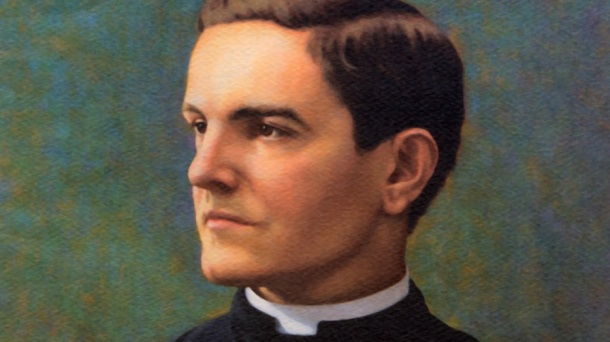
When I reflect on the ways that this parable has taken on flesh in history, I cannot help but think of the Venerable Servant of God, Father Michael McGivney, a parish priest who lived in 19th century America. He ministered to his flock with Christ-like compassion. Father McGivney recognized the material and spiritual poverty of so many members of the Catholic community of his day, and he understood that it was part of the lay vocation to become actively involved in offering assistance to brothers and sisters in need. He knew that it is not only priests and religious who have a vocation, but that every Christian is called by Christ to carry out a particular mission in the Church. He left a lasting legacy in founding and establishing the Knights of Columbus, a lay Catholic fraternal organization, that now has close to 1.8 million members worldwide (www.kofc.org). On Aug. 14, 1890, Father McGivney, a priest of the Diocese of Hartford (USA) died at the young age of 38 years old.
The Knights of Columbus are nothing more than the continuation of the parable of the Good Samaritan in history. This fraternal order specializes in preparing other Good Samaritans for our time. Like the Good Samaritan, Christ’s care for the sick and the suffering was an inspiration to Father McGivney who, as a priest, sought to be a living sign of Christ for the people he served.
Father McGivney and his brother Knights throughout history have been binding the wounds of those they discovered lying by the wayside of history and helping restore them to health and strength. In so doing, they imitate Christ, who came that we might have life in abundance.
“Nowhere is the face of our Church more attractive than in our open embrace of our neighbor,” Supreme Knight Carl Anderson recently wrote. “Each encounter with those in need is actually an opportunity to create a civilization of love, one person, one act at a time.”
Prayer for canonization
Many readers of this weekly column live in parts of the world where Knights are not present. Yet to simply know of their existence in the Church and in the world is cause for rejoicing and thanksgiving. They give flesh and blood to today’s wonderful Gospel story. I encourage you to pray to Father McGivney and ask him to help you become a Good Samaritan to those around you. Pray for the courage to reach out beyond boundaries, the boldness to get your hands dirty as you touch the outcast, and the grace and consolation to recognize the face of Jesus in those to whom you minister.
“God, our Father, protector of the poor and defender of the widow and orphan, you called your priest, Father Michael J. McGivney, to be an apostle of Christian family life and to lead the young to the generous service of their neighbor.“Through the example of his life and virtue may we follow your Son, Jesus Christ, more closely, fulfilling his commandment of charity and building up his Body, which is the Church. Let the inspiration of your servant prompt us to greater confidence in your love so that we may continue his work of caring for the needy and the outcast.
“We humbly ask that you glorify your servant Father Michael J. McGivney on earth according to the design of your holy will.“Through his intercession, grant the favor I now present (here make your request).“Through Christ our Lord. Amen.”
[The readings for 15th Sunday of Ordinary Time are Deuteronomy 30:10-14; Psalm 69; Colossians 1:15-20; Luke 10:25-37.]
Sunday, June 23, 2013
The question that truly matters...
The only question that matters
June 17, 2013 by Leave a Comment
The Twelfth Sunday in Ordinary Time, Year C – June 23, 2013
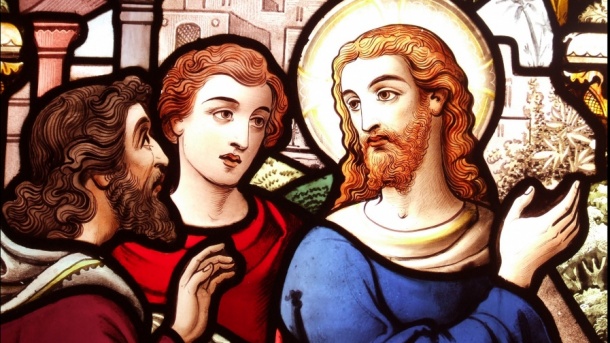
The second half of Luke’s Gospel is one great pilgrimage to Jerusalem, the city of destiny. For Luke, the Christian journey is a joyous way illuminated by the graciousness of the Savior of the world.
Along that way, Jesus asks a very important question of his disciples. “Who do you say that I am?” is the same question asked of every disciple in every age. From this moment onward in today’s Gospel, Jesus is on his way to the cross. Everything he says and does is another step toward Golgotha — where he will demonstrate perfect obedience, perfect love and total self-giving.
The incident in today’s Gospel (Luke 9:18-24) is based on Mark 8:27-33, but Luke has eliminated Peter’s refusal to accept Jesus as suffering Son of Man (Mark 8:32), and the rebuke of Peter by Jesus (Mark 8:33). Elsewhere in the Gospel, Luke softens the harsh portrait of Peter and the other apostles found in his Marcan source (Luke 22:39-46), which similarly lacks a rebuke of Peter that occurs in the source, Mark 14:37-38.
The disciples list a whole series of labels that people have applied to Jesus. And these names reveal all the different expectations held about him. Some thought of him as an Elijah, working toward a real confrontation with the powers that be. Some saw him as one of the ancient prophets.
When Jesus asks his disciples of their perception of him, he asks what people are saying about him. How do they see his work? Who is he in their minds? Probably taken aback by the question, the disciples dredge their memories for overheard remarks, snatches of shared conversation, opinions circulating in the fishing towns of the lake area. Jesus himself is aware of some of this. The replies of the disciples are varied, as are those of each of us today when Jesus, through someone else’s lips, asks us the same question, and with increasing frequency and intensity.
The concept of “Messiah” in Judaism
There was no single concept of “Messiah” in Judaism. The idea of Messiah “anointed one” as an ideal king descended from David is the earliest known to us, but in the Maccabaean period (about 163-63 B.C.) the Testaments of the Twelve Patriarchs, documents preserved to us in Greek, give evidence of belief in a Messiah from the tribe of Levi, to which the Maccabaean family belonged. The Dead Sea Scrolls contain various ideas: a priestly Messiah and the (lay) Messiah of Israel (1QSa); a prophet like Moses (Deuteronomy 18:18-19) who is also the star out of Jacob (Numbers 23:15-17) (4Q175); but also the Davidic Messiah (4Q174). Melchizedek is a deliverer also, but is not called Messiah (11QMelch).
To proclaim Jesus as the Messiah was a loaded and dangerous statement. It was all that Jesus’ enemies needed to use against him, and already there were many who were ready to enlist under the banner of a royal pretender. But, far more than this, such a role was not Jesus’ destiny. He would not and could not be that kind of militaristic or political Messiah.
Identifying Jesus Today
The struggle to identify Jesus and his role as Messiah continues today. Some say the individual Christian and the whole Church should be Elijah figures, confronting systems, institutions, national policies. That was the way Elijah saw his task. We only need to read the First Book of Kings (Chapters 17 to 21) to confirm this fact. Some say, like Jeremiah, that the domain of Christ, through his Church, is the personal and private side of life. Significantly, Jesus probes beyond both and asks, “You, who do you say I am?”
In Peter’s answer, “You are Messiah,” blurted out with his typical impetuosity, we are given a concept that involves both of the above ideas and goes beyond them. The Messiah came into society, and into individual lives, in a total way, reconciling the distinction between public and private. The quality of our response to this question is the best gauge of the quality of our discipleship. Let us remember certain facts and truths about Jesus’ background and world mission that have prepared for Christianity to be truly a world Church:
1) Jesus was born of political tribe of Judah – neither the priestly tribe of Levi nor the priestly family of Zaddok. Jesus was not a politician.
2) Jesus did have a sense of politics. World mission cannot be undertaken independently without serious interaction with politics.
3) Jesus established himself at Capernaum rather than in the desert or in some remote village. In his town along the northwest shore of the Sea of Galilee, there was a main road, tax collectors, and relations with the Roman centurion. Jesus was very much at home in Capernaum, not in Jerusalem.
4) Jesus bonded himself with all those who were sick and dying, with sinners, and those living on the fringes of society. Through his life, Jesus puts biblical justice into practice in proclaiming the Beatitudes. Authentic justice is a bonding of one’s self with the sick, the disabled, the poor and the hungry. But he did not neglect others as well. He dined with the rich and the mighty as well as with the poor and downtrodden. He teaches us an authentic spirit of inclusion of all people.
5) Jesus did not preach the political kingdom of David but the Kingdom of God. He had a great ability to appeal to everything and incorporate everything into his vision of kingdom. During his lifetime – he only tried to fulfill the hopes of Israel.
Piecing together the mosaic
If you have ever tried to piece together an ancient mosaic, you would know of the painstaking work involved in such an endeavor. During my biblical studies in the Holy Land, I participated in several archeological expeditions involving the discovery of ancient mosaics. Every little fragment matters in putting the whole picture together. In a similar way, when we attempt to answer Jesus’ question in today’s Gospel, “But who do you say that I am?” (Luke 9:20), we are being invited to piece together a magnificent mosaic
In today’s Gospel, Jesus will be the Messiah only when he lays down his life for others. And I will be like Jesus only when I lay down my life for others. Jesus’ identity is found in doing the will of God. Luke applies the same principle to us as disciples. Our true identity and purpose is found in going beyond ourselves. This is a daily task, “If any want to become my followers, let them deny themselves and take up their cross daily and follow me” (Luke 9:23). If I lose my life for Christ, I find it!
Remembering Tor Vergata 2000
One of the most powerful and memorable reflections on Jesus’ identity took place on the night of August 19, 2000 during the evening prayer vigil at Tor Vergata on Rome’s outskirts during World Youth Day of the Great Jubilee. I shall never forget that hot night, when silence came over the crowd of over one million young people as Pope John Paul II asked them the only question that matters: “Who do you say that I am?”
The elderly Pope addressed his young friends with those words that rang out over the seeming apocalyptic scene before him: “What is the meaning of this dialogue? Why does Jesus want to know what people think about him? Why does he want to know what his disciples think about him? Jesus wants his disciples to become aware of what is hidden in their own minds and hearts and to give voice to their conviction. At the same time, however, he knows that the judgment they will express will not be theirs alone, because it will reveal what God has poured into their hearts by the grace of faith.”
The Holy Father continued: “This is what faith is all about! It is the response of the rational and free human person to the word of the living God. The questions that Jesus asks, the answers given by the Apostles, and finally by Simon Peter, are a kind of examination on the maturity of the faith of those who are closest to Christ.”
It is Jesus
“It is Jesus in fact,” the Pontiff continued, “that you seek when you dream of happiness; he is waiting for you when nothing else you find satisfies you; he is the beauty to which you are so attracted; it is he who provokes you with that thirst for fullness that will not let you settle for compromise; it is he who urges you to shed the masks of a false life; it is he who reads in your hearts your most genuine choices, the choices that others try to stifle. It is Jesus who stirs in you the desire to do something great with your lives, the will to follow an ideal, the refusal to allow yourselves to be grounded down by mediocrity, the courage to commit yourselves humbly and patiently to improving yourselves and society, making the world more human and more fraternal.”
He concluded his memorable address with these words: “Dear friends, at the dawn of the Third Millennium I see in you the “morning watchmen” (cf. Is 21:11-12). In the course of the century now past young people like you were summoned to huge gatherings to learn the ways of hatred; they were sent to fight against one another. The various godless messianic systems that tried to take the place of Christian hope have shown themselves to be truly horrendous. Today you have come together to declare that in the new century you will not let yourselves be made into tools of violence and destruction; you will defend peace, paying the price in your person if need be. You will not resign yourselves to a world where other human beings die of hunger, remain illiterate and have no work. You will defend life at every moment of its development; you will strive with all your strength to make this earth ever more livable for all people.”
Who is this Jesus for us? This is indeed the only question that really matters.
__._,_.___
Friday, June 21, 2013
Dhikr for the 12th Sunday in Ordinary Time (C)
The Dhikr for 12th Sunday of the Ordinary Year (C)
Readings: Zechariah 12: 10-11; 13:1; Galatians 3: 26-29; Luke 9: 18-24
Text: “Once when Jesus was praying in solitude, and the disciples were with him, he asked them, ‘Who do the crowds say that I am?’ They said in reply, ‘John the Baptist; others, Elijah; still others, One of the ancient prophets has arisen.’ Then he said to them, ‘But who do you say that I am?’ Peter said in reply, ‘The Messiah of God’.” (Luke 9: 18-20)
Reflection: Today, each one us is being confronted to answer that specific question, “Who Jesus is in our lives…? There is NO more escaping… and our honest reply shapes our actual lives and our relations with our neighbors, especially the least…
DHIKR SIMPLE METHOD...
1st step: Write the Dhikr in your heart.
2nd step: Let the Dhikr remain always in on your lips and mind - RECITING the dihkr silently as often as possible...
3rd step: Be attentive to the disclosure of the meaning/s of the Dhikr in your life.
Bapa Elisha
Subscribe to:
Posts (Atom)